Quick take: March through May is Meghalaya's sweet spot — Dawki's Umngot River is at its glassy clearest, waterfalls thunder with early pre-monsoon rains, and the skies stay clear enough for the Laitlum Canyon sunrise. Catch these 10 places before June's deluge sets in.
Why visit Meghalaya this spring
Meghalaya — the "Abode of Clouds" — lives up to its name year-round, but the window between March and May offers a rare balance: enough rain to keep the waterfalls spectacular, but not so much that roads wash out and mist swallows every viewpoint. Daytime temperatures hover between a pleasant 15–25 °C in the Khasi and Jaintia Hills. The Umngot River at Dawki reaches peak transparency in spring as winter runoff clears, and trekking routes to living root bridges are at their driest and safest. By June, Cherrapunji and Mawsynram start receiving the heaviest rainfall on Earth, and many trails become impassable. Spring is your window — don't miss it.
Best time to go
- March–May: The golden window. Clear mornings, moderate afternoon showers, waterfalls active, Dawki river crystal-clear, ideal for trekking and photography
- June–September: Full monsoon — waterfalls at maximum power but extreme rainfall (up to 2,500 mm/month), foggy roads, some areas inaccessible, leeches active on trails
- October–November: Post-monsoon freshness, excellent visibility, waterfalls still flowing, comfortable temperatures
- December–February: Cool and often misty (8–15 °C), some areas foggy, but fewer tourists and atmospheric scenery
1. Shillong
The "Scotland of the East" is Meghalaya's capital and your most likely base. At 4,900 feet, Shillong offers a refreshing climate, a thriving cafe culture, and a live-music scene unlike any other Indian hill station. Visit Shillong Peak for a 360-degree panorama, stroll through Ward's Lake, explore the Don Bosco Museum (Northeast India's finest ethnographic collection), and catch a local band at a Police Bazaar cafe. Spring brings jacaranda blooms and clear views from the peak that disappear in monsoon mist.
Getting there: 3 hours from Guwahati by car (NH-6). Well-connected by shared taxis and buses.
Read our full guide: Shillong: Complete Travel Guide
2. Cherrapunji (Sohra)
Cherrapunji held the world rainfall record for decades and its landscape proves it — massive waterfalls pour off sheer limestone cliffs into misty valleys. Nohkalikai Falls (1,115 ft, India's tallest plunge waterfall) and the Seven Sisters Falls are the headliners, but even the roadside cascades impress. The Mawsmai Cave offers an easy limestone cavern walk, and the Eco Park viewpoints look out over the Bangladesh plains. Spring showers keep the falls flowing without the monsoon's zero-visibility fog.
Getting there: 2 hours from Shillong by car (54 km).
Read our full guide: Cherrapunji Travel Guide: Wettest Place on Earth
3. Dawki & Umngot River
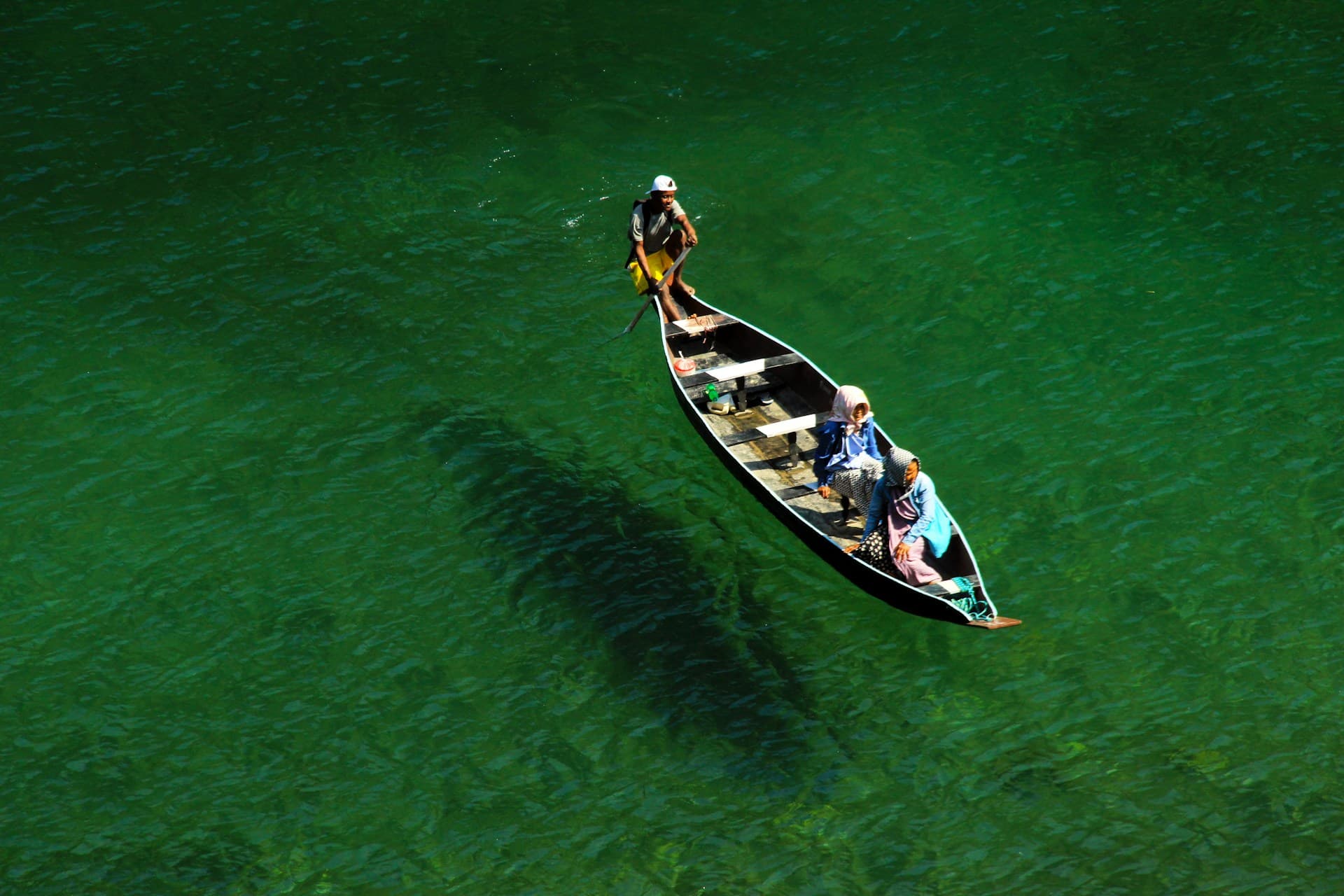
The Umngot River at Dawki is famous for crystal-clear water so transparent that boats appear to float in mid-air. This is India's border with Bangladesh, and the river gorge is dramatic. Spring (March–April) is when the water is clearest — monsoon silt hasn't arrived, and the river runs a luminous green-blue. Boating on the Umngot is the primary draw, but the drive down from Shillong through the Jaintia Hills is scenic in its own right.
Getting there: 3 hours from Shillong, 1.5 hours from Cherrapunji.
Read our full guides: Dawki: Complete Travel Guide | Dawki's Crystal Clear River
4. Mawlynnong
Awarded the title of "Asia's Cleanest Village," Mawlynnong is a tiny Khasi settlement where every pathway is swept, flowers line every fence, and waste is composted in bamboo bins. The village living root bridge is a gentle 10-minute walk, and the Sky Walk — a bamboo viewing platform atop a massive tree — offers canopy-level views of the surrounding forest and glimpses of Bangladesh. Spring's clear skies make the Sky Walk views exceptional. The village is best explored on foot in 2–3 hours.
Getting there: 3 hours from Shillong, often combined with a Dawki day trip.
Read our full guide: Mawlynnong: Asia's Cleanest Village Guide
5. Laitlum Canyons
"Laitlum" means "end of hills" in Khasi, and the name fits: the land drops away into a vast green canyon with terraced hillsides descending into haze. It's only 23 km from Shillong, making it perfect for a sunrise trip. A stone staircase descends into the canyon for a moderate 2–3 hour trek through Khasi villages. Spring mornings bring clear canyon views that the monsoon erases for months. This is one of Meghalaya's most photogenic spots with almost no crowds on weekday mornings.
Getting there: 45 minutes from Shillong by car.
Read our full guide: Laitlum Canyons: Complete Guide
6. Mawsynram
Mawsynram has overtaken Cherrapunji as the wettest place on Earth, receiving over 11,800 mm of annual rainfall. Visiting in spring lets you experience the village and its surroundings before the real deluge begins. The highlight is Mawjymbuin Cave, where a massive stalagmite resembling a Shiva lingam has formed over millennia from dripping limestone. The drive from Cherrapunji to Mawsynram passes through rolling Khasi Hills with panoramic valley views.
Getting there: 1.5 hours from Cherrapunji, 2.5 hours from Shillong.
7. Nongriat & the Double Decker Living Root Bridge
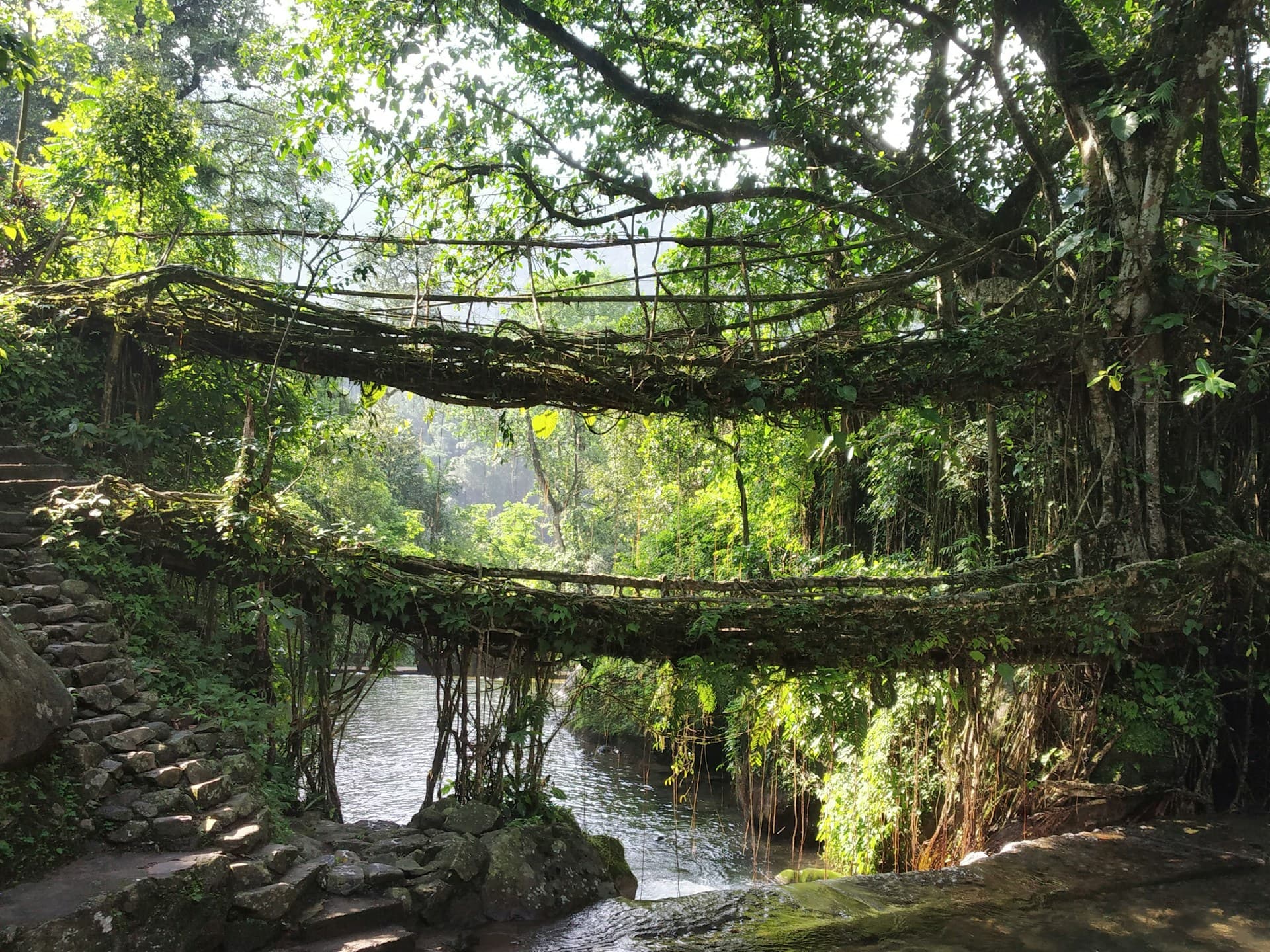
The trek to Nongriat village is Meghalaya's most iconic adventure. Around 3,500 stone steps descend from Tyrna village to the double-decker living root bridge — two bridges grown from the aerial roots of rubber fig trees over 150+ years, stacked one above the other. Below the bridge, natural rock pools invite a swim, and the nearby Rainbow Falls cascades into a mist-filled gorge. Spring is the best season for this trek: the steps are dry, leeches are dormant, and the pools are refreshing without being dangerously swollen. Budget a full day — the return climb is demanding.
Getting there: Drive to Tyrna village (2.5 hours from Shillong), then trek down 3,500 steps (1.5–2 hours).
8. Jowai, Nartiang & Krang Suri Waterfall
Jowai, the capital of West Jaintia Hills, is the gateway to attractions most tourists overlook. The Nartiang Monoliths are the largest collection of megalithic stones in Meghalaya — standing stones and dolmens erected by Jaintia kings centuries ago. Nearby, the Nartiang Durga Temple is one of the region's most important Hindu pilgrimage sites. The real star is Krang Suri Waterfall, where turquoise water cascades into a natural swimming pool inside a semi-cave. Spring keeps the pool accessible and the water beautifully clear.
Getting there: 2 hours from Shillong by car. Krang Suri is 40 minutes further from Jowai.
9. Mawsmai Cave & Krem Mawmluh
Meghalaya sits on one of the world's largest limestone karst systems, and its caves are a major draw. Mawsmai Cave near Cherrapunji is a short (150 m), well-lit walk through narrow passages with dramatic stalactite and stalagmite formations — accessible for all fitness levels. For serious cavers, Krem Mawmluh is over 7 km long, one of the longest caves in the Indian subcontinent, featuring underground rivers and vast chambers. Spring keeps water levels lower inside the caves, making deeper sections more accessible.
Getting there: Mawsmai Cave is 6 km from Cherrapunji center. Krem Mawmluh is near the same area.
10. Elephant Falls & Umiam Lake
These two stops bookend the Shillong experience. Elephant Falls, a three-tiered cascade surrounded by tropical forest, is just 12 km from the city center and takes under an hour to visit. Umiam Lake (also called Barapani), a massive reservoir 15 km north of Shillong on the Guwahati highway, offers kayaking, boating, and a scenic lakeside drive. Spring brings calm waters to Umiam — ideal for kayaking — and enough flow to Elephant Falls to keep all three tiers photogenic.
Getting there: Elephant Falls is 20 minutes from Shillong; Umiam Lake is 30 minutes on the Guwahati road.
Suggested itinerary (sample)
Option A: 4–5 days (Highlights)
- Day 1: Arrive Shillong from Guwahati (3 hrs). Afternoon at Elephant Falls, Ward's Lake, evening cafe/live music scene.
- Day 2: Drive to Cherrapunji (2 hrs). Nohkalikai Falls, Seven Sisters Falls, Mawsmai Cave, Eco Park viewpoints. Overnight in Cherrapunji.
- Day 3: Morning trek to a living root bridge near Cherrapunji. Afternoon drive to Dawki (1.5 hrs). Umngot River boating. Drive to Mawlynnong (30 min), explore village. Return to Shillong.
- Day 4: Sunrise at Laitlum Canyons (45 min from Shillong). Return for Shillong Peak, Don Bosco Museum, Police Bazaar shopping.
- Day 5: Umiam Lake kayaking. Depart to Guwahati.
Option B: 7–8 days (Complete Meghalaya)
- Days 1–2: Shillong — Elephant Falls, Ward's Lake, Shillong Peak, Don Bosco Museum, live music, Laitlum Canyons sunrise.
- Day 3: Drive to Cherrapunji. Waterfalls, caves, viewpoints. Overnight Cherrapunji.
- Day 4: Full-day Nongriat trek to double-decker living root bridge and Rainbow Falls. Overnight Cherrapunji.
- Day 5: Drive to Mawsynram (Mawjymbuin Cave), then to Mawlynnong (Asia's cleanest village, Sky Walk). Continue to Dawki. Overnight near Dawki.
- Day 6: Morning Umngot River boating at Dawki. Drive to Jowai (2 hrs). Nartiang monoliths, Nartiang temple.
- Day 7: Krang Suri waterfall. Return to Shillong via Jowai.
- Day 8: Umiam Lake morning. Depart to Guwahati or continue to Kaziranga (Assam).
Budget & car recommendation
- Best for 1–3 people: 5-seater sedan ✅ (all major Meghalaya roads are well-paved)
- Best for 4–6 people / more luggage: 7-seater ✅
FAQs
Q: What is the best month to visit Meghalaya? A: March and April are ideal — clear skies, moderate temperatures (15–25 °C), crystal-clear rivers, waterfalls flowing without monsoon fog, and dry trekking conditions. October–November is an excellent alternative.
Q: Is Meghalaya safe for tourists? A: Yes. Meghalaya is one of the safest states in Northeast India for tourists. The Khasi, Jaintia, and Garo communities are welcoming. Exercise normal precautions, especially on mountain roads and during treks.
Q: Do I need permits to visit Meghalaya? A: No. Unlike Arunachal Pradesh, Meghalaya does not require Inner Line Permits or special permissions for Indian or foreign nationals. You can enter freely from Guwahati.
Q: How many days do I need for Meghalaya? A: 4–5 days covers the highlights (Shillong, Cherrapunji, Dawki, Laitlum). For a thorough trip including Nongriat trek, Mawsynram, Jowai, and Krang Suri, plan 7–8 days.
Q: Can I combine Meghalaya with Assam? A: Absolutely — this is the most popular Northeast India combination. Guwahati is 3 hours from Shillong. A common route: Guwahati (1–2 days) → Shillong & Meghalaya (4–5 days) → Kaziranga, Assam (2–3 days). The entire loop takes 8–10 days.
Contact / Book
Want a custom plan? Use the Estimate button or WhatsApp us.