Quick take: Spring and summer (March–May) is the golden window for Assam — Kaziranga's gates are open, Rongali Bihu lights up the state in April, and the first-flush tea harvest fills Jorhat's gardens with emerald green. Here are the 10 places you shouldn't miss.
Why visit Assam this spring & summer
Assam transforms between March and May. Winter fog lifts off the Brahmaputra, revealing clear blue skies and pleasant 20–30 °C temperatures ideal for wildlife safaris, temple visits, and river cruises. The Rongali Bihu festival in mid-April is the cultural highlight of the year — expect traditional Bihu dance, feasts, and community celebrations statewide. It's also first-flush tea season, when Assam's world-famous gardens produce their most aromatic leaves. By June the monsoon arrives and many parks close, so spring is your best bet for a complete Assam experience.
Best time to go
- March–April: Ideal weather (20–30 °C), Kaziranga and Manas parks open, Rongali Bihu festival in April, first-flush tea harvest
- May–early June: Warmer (28–35 °C) but still feasible; fewer crowds, lower prices, lush green landscapes
- June–September: Monsoon — parks close, ferry services disrupted, heavy rainfall
- October–February: Post-monsoon and winter — also excellent, but different character; see our individual guides for winter-specific tips
1. Kaziranga National Park
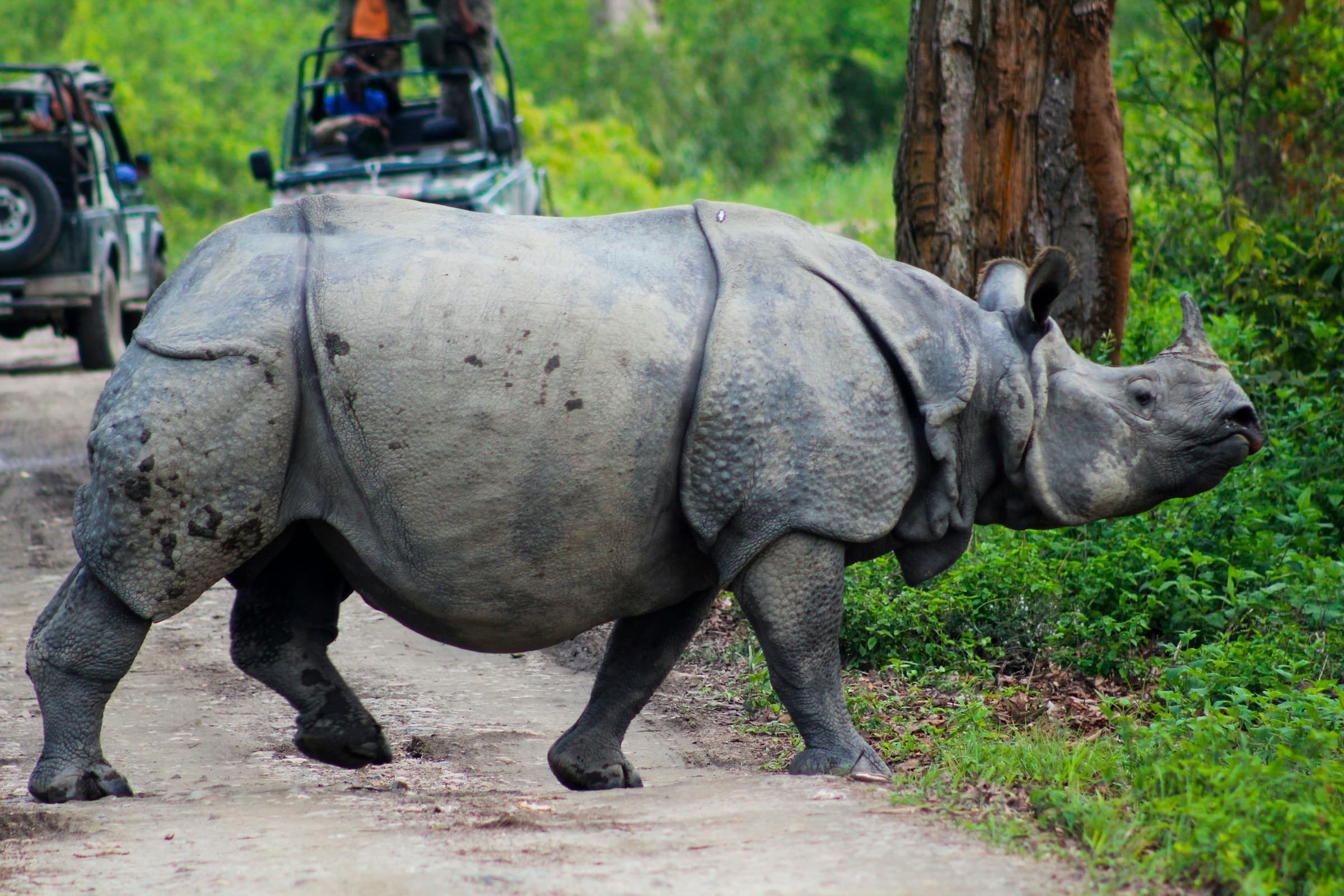
Kaziranga is home to two-thirds of the world's one-horned rhinoceros population and holds UNESCO World Heritage status. The park's Central, Western, and Eastern ranges offer jeep and elephant safaris through tall grasslands, wetlands, and semi-evergreen forests. Spring brings clear skies and lower water levels, making rhino and tiger sightings more likely. The park typically opens in November and closes by late April, so March–April is the final window before monsoon shutdown.
Getting there: 4–5 hours by car from Guwahati (NH-37).
Read our full guide: Kaziranga National Park: Complete Safari & Wildlife Guide
2. Majuli Island
The world's largest river island sits in the Brahmaputra and is a living museum of Assamese Vaishnavite culture. Its 22 Satras (monasteries) preserve centuries-old traditions of Sattriya dance, mask-making, and manuscript painting. Spring is ideal — the river is calm enough for reliable ferry crossings, and the island's paddy fields glow green before the monsoon floods.
Getting there: Drive to Neamati Ghat near Jorhat (6 hours from Guwahati), then a 1-hour ferry.
Read our full guide: Majuli Island: World's Largest River Island Travel Guide
3. Guwahati & Kamakhya Temple
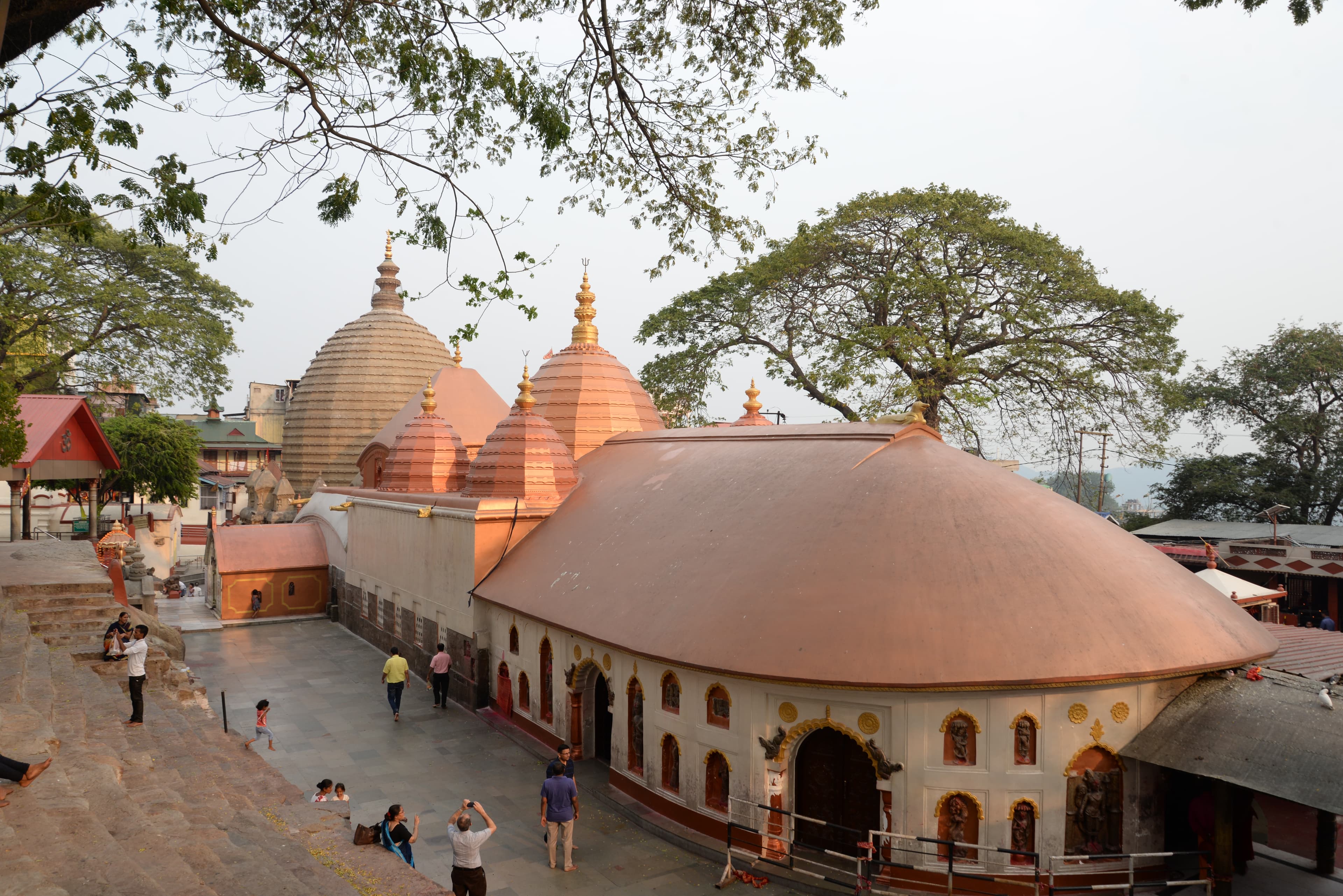
Assam's gateway city is far more than a transit stop. The Kamakhya Temple atop Nilachal Hill is one of India's most important Shakti Peethas, drawing pilgrims year-round. Spring is pleasant for the steep climb, and you'll avoid the massive Ambubachi Mela crowds (June). Beyond the temple, explore the Assam State Museum, take a sunset cruise on the Brahmaputra, and visit the silk-weaving village of Sualkuchi.
Getting there: Guwahati is connected by air (Lokpriya Gopinath Bordoloi International Airport), rail, and road.
Read our full guides: Guwahati Travel Guide | Kamakhya Temple Guide
4. Umananda Island
Perched on the world's smallest inhabited river island in the Brahmaputra, the Umananda Temple is dedicated to Lord Shiva and dates back to 1694. The short ferry ride from Kachari Ghat is a highlight in itself — you'll glide past river dolphins if you're lucky. Spring mornings offer calm waters and haze-free views of the Guwahati skyline from the island.
Getting there: 15-minute ferry from Kachari Ghat in Guwahati.
Read our full guide: Umananda Island Guide
5. Sivasagar
The former capital of the 600-year Ahom dynasty is an open-air history lesson. Rang Ghar, Asia's oldest amphitheatre, Talatal Ghar with its underground escape tunnels, and the trio of massive temple-tanks (Sivadol, Vishnu Dol, Devi Dol) all sit within a few kilometres of each other. Spring temperatures (22–28 °C) make walking between sites comfortable, and the sites are far less crowded than Rajasthan's forts.
Getting there: 5 hours from Guwahati via NH-37, or a short detour from Jorhat.
6. Manas National Park
This UNESCO World Heritage Site on the Bhutan border is a Project Tiger reserve and home to the rare golden langur, pygmy hog, and wild water buffalo. Unlike Kaziranga's grasslands, Manas features riverine forests along the Manas River with a dramatic Himalayan foothills backdrop. The park opens in October and closes by late April — spring visits combine comfortable weather with active wildlife around shrinking water holes.
Getting there: 4–5 hours by car from Guwahati via Barpeta Road.
7. Jorhat & Assam Tea Gardens
Jorhat is the tea capital of the world, and spring is harvest season. Visit heritage tea estates like Tocklai (Asia's oldest tea research station), walk through manicured gardens during the first-flush plucking, and stay in colonial-era bungalows converted into boutique lodges. The surrounding area also offers Gibbon Wildlife Sanctuary — India's only sanctuary for the hoolock gibbon.
Getting there: 6 hours from Guwahati by car; also connected by air via Jorhat Airport.
8. Haflong
Assam's only hill station sits at 680 metres in the North Cachar Hills, offering pine-scented air and panoramic views of terraced hillsides. Haflong Lake, surrounded by hills, is perfect for a quiet morning walk. The nearby village of Jatinga is known for its mysterious bird phenomenon during late monsoon, but spring visits offer pleasant trekking weather and blooming orchids. The Haflong–Lumding rail section features engineering marvels including viaducts and tunnels.
Getting there: 8 hours from Guwahati by car via Dima Hasao district. Also reachable by train (Haflong station).
9. Pobitora Wildlife Sanctuary
If your schedule doesn't allow the drive to Kaziranga, Pobitora is the answer. This compact sanctuary has the highest density of Indian one-horned rhinoceros per square kilometre in the world. It's just 48 km from Guwahati, making it ideal for a half-day or day trip. Spring mornings bring mist-free grasslands and excellent photographic light. The sanctuary is much less visited than Kaziranga, so you'll often have jeep routes to yourself.
Getting there: 1.5 hours from Guwahati by car.
10. Dibrugarh & Brahmaputra River Cruises
Known as the Tea City of India, Dibrugarh sits on the southern bank of the Brahmaputra and serves as the starting point for luxury river cruises downstream to Guwahati. Multi-day cruise itineraries pass through Kaziranga, Majuli, and Sivasagar — an excellent way to see Assam from the water. In spring, river levels are stable and skies clear, offering ideal cruising conditions. On land, explore Chabua's tea gardens and the historic Jaipur Rainforest.
Getting there: 7–8 hours from Guwahati by car; also connected by air via Dibrugarh Airport.
Suggested itinerary (sample)
Option A: 5–6 days (Highlights)
- Day 1: Arrive in Guwahati. Kamakhya Temple, Umananda Island ferry, Brahmaputra sunset cruise.
- Day 2: Drive to Kaziranga (4–5 hrs). Evening jeep safari in Central Range.
- Day 3: Morning elephant safari, afternoon Western Range jeep safari. Overnight Kaziranga.
- Day 4: Drive to Jorhat (3 hrs). Tea estate tour, Gibbon Wildlife Sanctuary.
- Day 5: Ferry to Majuli Island. Satra visits, mask-making workshop, overnight on island.
- Day 6: Morning bird watching on Majuli. Return to Jorhat, fly or drive back to Guwahati.
Option B: 8–10 days (Complete Assam)
- Days 1–2: Guwahati — temples, museums, Sualkuchi silk village, Pobitora day trip.
- Day 3: Drive to Manas National Park. Afternoon safari.
- Day 4: Morning safari in Manas. Drive to Kaziranga (6 hrs).
- Days 5–6: Kaziranga safaris across all three ranges.
- Day 7: Drive to Sivasagar. Explore Ahom heritage sites.
- Day 8: Drive to Jorhat. Tea estate visits.
- Day 9: Ferry to Majuli. Satras and cultural immersion.
- Day 10: Return to Guwahati via Jorhat or continue to Dibrugarh for a river cruise.
Budget & car recommendation
- Best for 1–3 people: 5-seater sedan ✅
- Best for 4–6 people / more luggage: 7-seater ✅
Rather explore Guwahati and nearby spots like Pobitora or Sualkuchi on your own? RedPanda Travels also rents out self-drive bikes, scooters, and a 7-seater Ertiga — pickup and drop in Guwahati, starting at ₹800/day. See our self-drive rental guide for details.
FAQs
Q: What is the best month to visit Assam? A: March and April are the best months overall. The weather is pleasant (20–30 °C), national parks are open, tea gardens are in first-flush harvest, and the Rongali Bihu festival in April adds a cultural dimension you won't find at other times of year.
Q: Is Assam safe for tourists? A: Yes. Assam's major tourist destinations — Guwahati, Kaziranga, Jorhat, Majuli — are well-connected, have established tourism infrastructure, and are considered safe for domestic and international travelers. Exercise normal precautions as you would anywhere.
Q: Do I need permits to visit Assam? A: Indian citizens do not need any special permit. Foreign nationals do not need an Inner Line Permit for Assam (unlike Arunachal Pradesh), but should carry valid ID and check any region-specific advisories.
Q: How many days do I need for Assam? A: A minimum of 5–6 days covers the highlights (Guwahati, Kaziranga, Majuli). For a more thorough exploration including Manas, Sivasagar, and tea estates, plan 8–10 days.
Q: Can I combine Assam with Meghalaya or Arunachal Pradesh? A: Absolutely. Guwahati is the gateway to all three states. A common combination is Guwahati + Shillong/Cherrapunji (Meghalaya, 3–4 days) + Kaziranga (2–3 days). Adding Arunachal Pradesh (Tawang circuit) requires at least 5 additional days.
Contact / Book
Want a custom plan? Use the Estimate button or WhatsApp us.